




24 Aug Indian Government Revives Domestic IT Manufacturing with PLI Scheme
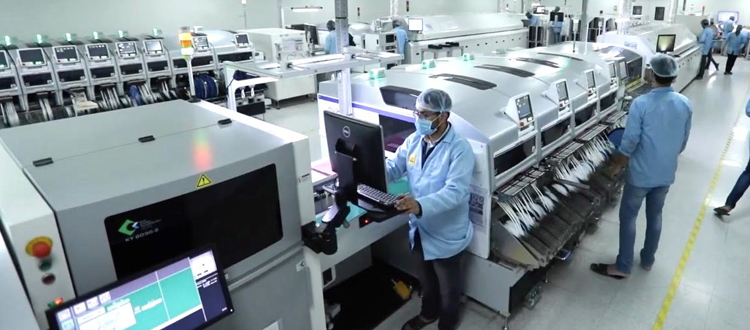
The Indian government’s Production Linked Incentive (PLI) scheme has taken yet another step to boost domestic IT manufacturing in the country. The PLI scheme, which was launched last year, offers incentives for companies manufacturing electronics and semiconductors in India. The scheme seeks to promote domestic production and reduce the country’s reliance on imported electronics. The IT sector is among the sectors that stand to benefit from the scheme, with the Indian government targeting a significant increase in domestic IT manufacturing in the next few years. This blog post examines the impact of the PLI scheme on the IT sector in India and the country’s quest to gain greater technological independence.
The Indian government’s efforts to promote domestic IT manufacturing date back to 2014 when Prime Minister Narendra Modi launched the “Make in India” campaign. The campaign sought to make India a destination for high-tech manufacturing and improve its global competitiveness. However, the country’s dependence on imported electronics and the lack of a robust domestic electronics manufacturing ecosystem hindered the full realization of the campaign’s objectives.
Fast forward to 2021, the PLI scheme promises to revive the domestic IT manufacturing industry in India with financial incentives. Under the scheme, companies are eligible for incentives worth up to 4 percent of incremental sales of goods manufactured in India over a period of five years, starting from fiscal year 2021-22. The scheme aims to attract global electronics manufacturers to set up factories in India and produce components and products locally.
The benefits of the PLI scheme are already being felt across the IT industry in India. In November 2020, the Indian government approved the scheme for electronic manufacturing and telecommunication equipment. Already, several leading global IT manufacturers such as Samsung, Foxconn, and Wistron have announced plans to expand their production facilities in India as a result of the scheme. This expansion of domestic production facilities will significantly boost technological self-reliance and create thousands of jobs in the country.
The PLI scheme is also expected to improve India’s exports in the IT sector. The Indian government hopes that, by 2025, India will become a net exporter of electronics and reduce the country’s trade deficit significantly. The scheme will encourage the establishment of backward linkages in the electronics industry, and the components produced locally will reduce the cost of production and, therefore, improve the country’s competitiveness in the global market.
The PLI scheme’s success in attracting investment and boosting domestic IT manufacturing has spurred India’s efforts to become a global tech hub. The government plans to set up a dedicated “electronic manufacturing cluster” near Chennai, where it will provide an ecosystem for international and domestic companies to set up their facilities. The cluster will seek to foster innovation and promote new technologies that will boost India’s capacity to produce high-quality IT products and software services.
Conclusion:
The PLI scheme has come as a game-changer in boosting India’s technology manufacturing industry, positioning it as a global leader in technology innovation. The incentives and enablers provided by the scheme are already leading to changes across the industry, with global IT manufacturers seeking to establish production facilities in India. The scheme’s success creates a domino effect with an increased number of jobs, an improvement in the technological ecosystem, and an increase in the country’s exports, which will eventually enhance India’s economic growth. With the PLI scheme and the government’s determination to make India a global tech hub, the country appears to be on track to achieve its goals of technological independence, economic vigor, and global competitiveness.
A WordPress Commenter
Posted at 09:29h, 24 AugustHi, this is a comment.
To get started with moderating, editing, and deleting comments, please visit the Comments screen in the dashboard.
Commenter avatars come from Gravatar.